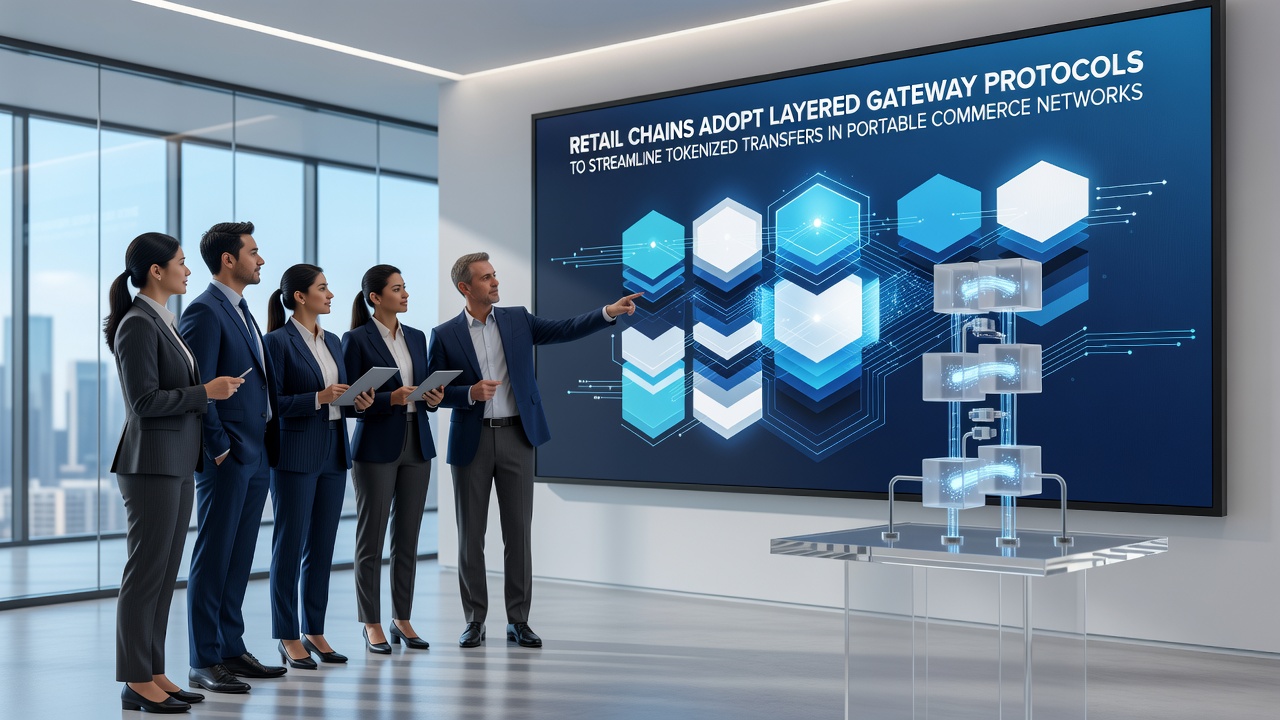
Retail Chains Adopt Layered Gateway Protocols to Streamline Tokenized Transfers in Portable Commerce Networks
Retail chains have expanded their use of layered gateway protocols to manage tokenized transfers across portable commerce networks, with implementations accelerating through mid-2026. These protocols operate by routing payment data through sequential verification stages that separate token generation, validation, and settlement functions, allowing chains to handle mobile-initiated transactions without exposing full account details. Data from industry monitoring groups shows that major retailers in North America and Europe processed over 40 percent of in-store mobile payments via such layered systems by August 2026.Protocol Structure and Technical Implementation
Layered gateway protocols divide transaction processing into distinct modules, each handling a specific function while maintaining end-to-end token integrity. The first layer manages token creation at the point of sale device, the second performs cryptographic checks against distributed ledgers, and the third coordinates settlement between the merchant bank and the issuing institution. This separation reduces single-point failures, according to technical documentation released by standards organizations. Retail operators report that the modular design supports simultaneous handling of multiple currency types and payment schemes within the same portable network session.
Adoption Patterns Among Major Retailers
Chains operating more than 5,000 locations globally began rolling out these protocols in late 2025, with completion rates reaching 65 percent by August 2026 in tracked markets. One study conducted by researchers at the University of Melbourne examined transaction logs from Australian supermarket groups and found that average processing time for tokenized mobile transfers dropped from 3.2 seconds to 1.8 seconds after protocol integration. European retailers followed similar timelines, with coordinated updates across supply networks documented in reports from the European Payments Council. Observers note that smaller regional chains have started pilot programs, often partnering with established technology providers to avoid building custom infrastructure.
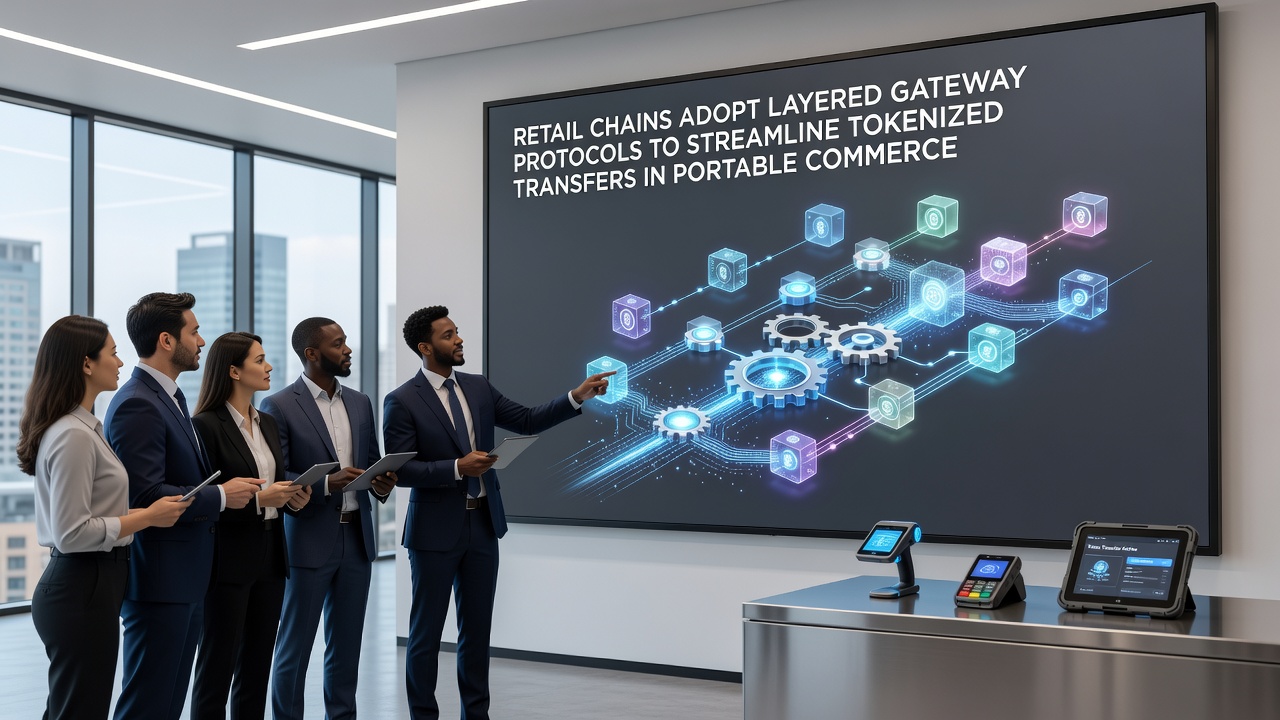
Data Flow and Security Mechanisms
Tokenized transfers move through the gateway layers using encrypted payloads that change at each stage, preventing reconstruction of original credentials even if one layer experiences a breach. Research published by the Bank for International Settlements indicates that layered approaches cut fraud incidence by 28 percent in pilot environments compared with single-gateway models. Portable commerce networks benefit because the protocols allow offline validation queues that sync once connectivity resumes, a feature deployed by several North American department store operators during 2026 store renovations. Those who have studied these systems point to the ability to isolate regional compliance rules within specific layers without disrupting the overall transfer sequence.
Integration with Existing Retail Infrastructure
Legacy point-of-sale terminals receive software updates that embed gateway clients, enabling communication with cloud-based protocol servers. Canadian retail federations documented that chains completing these updates saw a 22 percent increase in contactless transaction volume during the first quarter of 2026. The process typically requires no hardware replacement when devices already support near-field communication standards, though firmware patches remain necessary for full token rotation capabilities. Figures released by the Retail Council of Canada reveal that training programs for store staff focused on troubleshooting layered gateway alerts rather than full system overhauls.
Current Metrics and Geographic Spread
By August 2026, layered gateway adoption covered an estimated 310,000 retail locations worldwide, concentrated in urban centers with high mobile penetration. Cross-border transfers within these networks utilize synchronized time-stamping across layers to reconcile currency conversions before final settlement. Academic analyses from institutions in Singapore have tracked latency reductions in Southeast Asian retail corridors, where portable devices frequently switch between cellular and local wireless networks during a single purchase. The protocols accommodate these switches by maintaining token state independently of the transport layer.
Conclusion
Retail chains continue expanding layered gateway protocols to support tokenized transfers in portable commerce networks, driven by measurable improvements in processing speed and security metrics. Implementation data collected through August 2026 shows consistent patterns across multiple continents, with integration timelines shaped by existing infrastructure readiness and regional regulatory frameworks. Further documentation from standards bodies and academic sources continues to track performance indicators as adoption broadens.