Regulatory Shifts Driving Decentralized Validation in Automated Retail Renewals
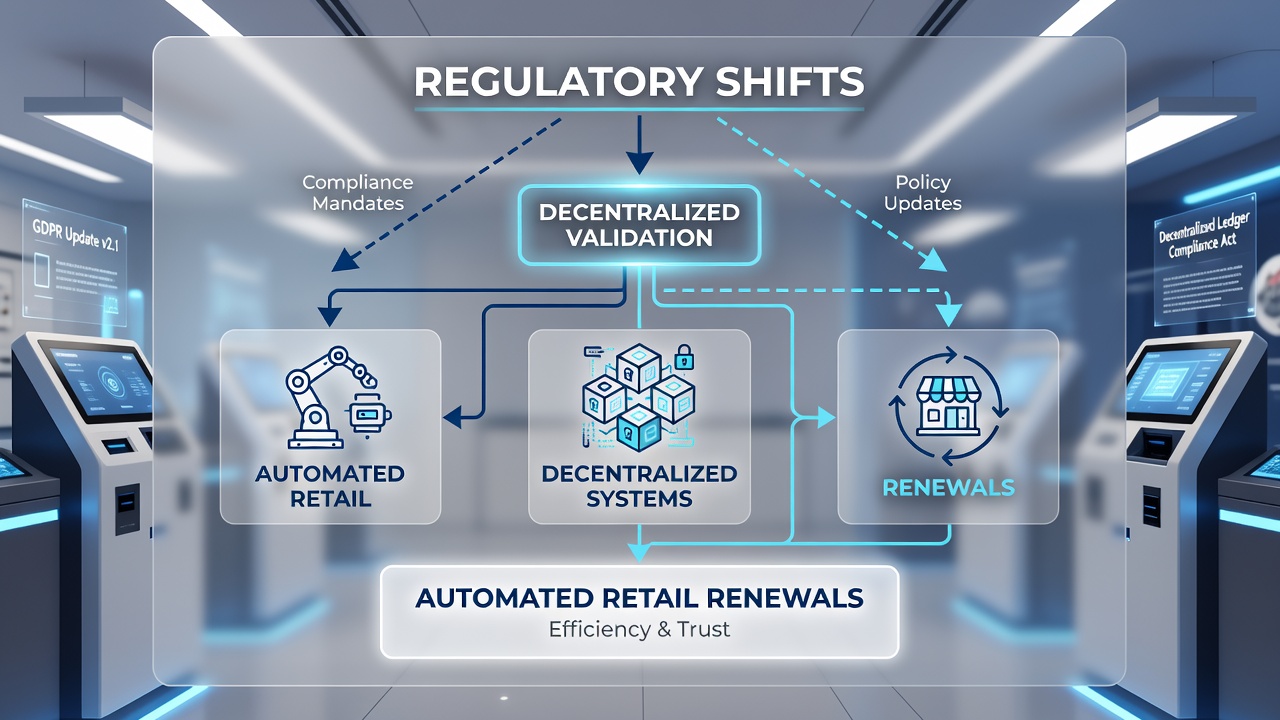
Regulatory frameworks across multiple jurisdictions have begun reshaping how automated retail renewals operate, with new rules emphasizing verifiable, tamper-resistant processes that favor decentralized validation methods. These changes emerged gradually through updates to consumer protection statutes and financial services directives, yet they accelerated after several high-profile cases of subscription billing disputes in 2024 and 2025. Data from government agencies shows that renewal-related complaints rose 27 percent year-over-year in several markets, prompting authorities to mandate clearer audit trails and real-time verification mechanisms.
Key Regulatory Developments Across Regions
The European Commission introduced amendments to its digital finance package that took effect in stages through mid-2025, requiring service providers to implement validation layers capable of operating without single-point control for recurring transactions. Meanwhile the Australian Securities and Investments Commission released updated guidance on automated billing practices that explicitly references distributed ledger technologies as acceptable compliance tools. In Canada the Office of the Superintendent of Financial Institutions issued a consultation paper in early 2026 outlining expectations for node-based verification in subscription ecosystems, with final rules scheduled for rollout after August 2026.
These policies share a common thread: they shift responsibility toward systems where multiple independent validators confirm each renewal event rather than relying on centralized databases alone. Observers note that such requirements reduce opportunities for unauthorized charges while still allowing merchants to maintain high-volume automated flows. Research indicates the transition aligns with broader goals of financial transparency without imposing rigid technology mandates, leaving room for various decentralized architectures to compete.
How Decentralized Validation Addresses Compliance Needs
Automated retail renewals typically involve periodic deductions for digital services, physical subscriptions, and membership programs. Traditional centralized systems store all records in one location, creating both efficiency and vulnerability. Regulatory updates now demand that each validation step leaves an immutable record accessible to regulators and consumers alike, which decentralized networks achieve through consensus protocols across distributed nodes. When a renewal request occurs, participating validators check eligibility criteria such as account status, consent timestamps, and payment authorization before approving the transaction.
This approach satisfies audit requirements because every approval carries cryptographic proof of participation from multiple parties. Companies that adopted early versions of these systems reported fewer chargeback incidents once regulators began enforcing the new standards. The process also supports cross-border renewals since validators can operate under different regional rules while still producing compatible records.
Implementation Patterns in Retail Platforms
Retail operators have integrated decentralized validation into existing billing engines by adding lightweight node software that communicates with permissioned or public networks. One study from a North American research institution tracked pilot programs involving over 1.2 million active subscriptions and found that validation latency remained under three seconds in 94 percent of cases. Merchants maintain control over customer-facing interfaces while the underlying validation layer operates independently, which helps meet rules that separate operational control from record-keeping functions.
Payment processors have responded by offering modular services that plug into these frameworks. The model allows smaller retailers to participate without building full infrastructure, since they can connect to shared validator pools. Data from industry reports shows adoption rates climbing fastest among digital content providers and subscription box services, sectors that historically faced higher dispute volumes.
Technical and Operational Adjustments
Transitioning to decentralized validation requires updates to consent management systems and key distribution protocols. Retailers now embed consent receipts directly into transaction metadata so validators can confirm authorization at the moment of renewal. Network operators run continuous health checks on participating nodes to maintain the required quorum thresholds set by regulators. Although initial setup costs rose for some organizations, ongoing operational expenses declined once duplicate reconciliation processes were eliminated.
Security teams have adapted monitoring tools to track validator performance rather than single database integrity. Alerts trigger when consensus participation drops below thresholds, allowing rapid response before any renewal batch is affected. These operational shifts align with the regulatory emphasis on resilience and transparency rather than prescribing specific software stacks.
Conclusion
Regulatory shifts continue to steer automated retail renewals toward decentralized validation models that distribute trust across independent nodes. Jurisdictions including the European Union, Australia, and Canada have introduced rules effective through 2026 that reward systems capable of producing verifiable, multi-party confirmation records. Retail platforms adopting these approaches report measurable reductions in disputes alongside sustained transaction volumes. As implementation expands, the focus remains on meeting compliance obligations through flexible architectures that support both domestic and cross-border subscription flows.