Regulatory Policies Steering Virtual Currency Adoption Across Merchant Settlement Networks
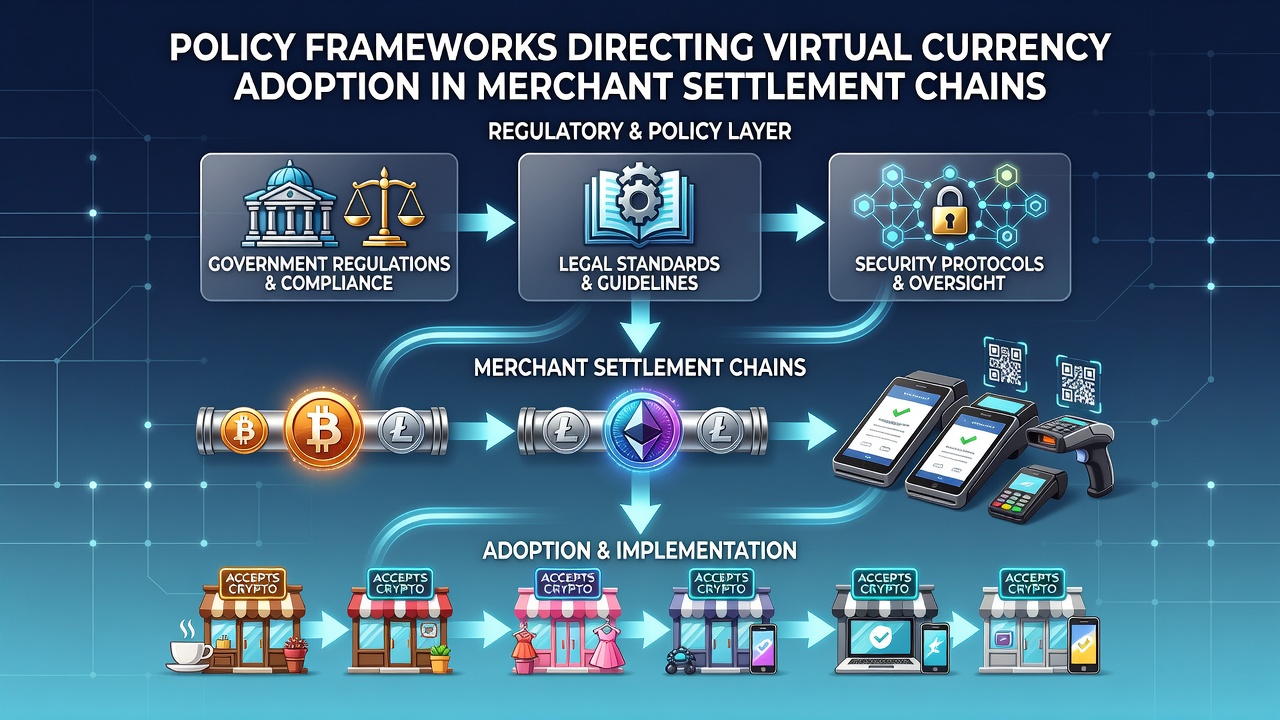
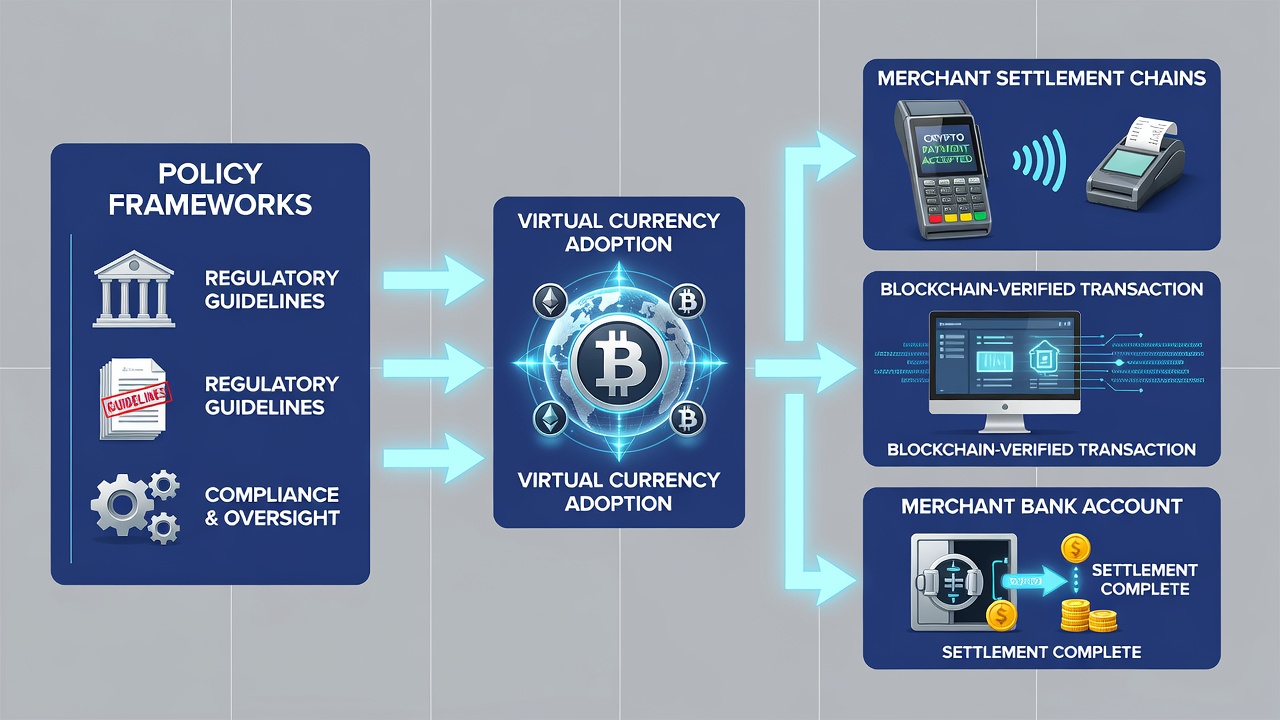
Policy frameworks have shaped how virtual currencies integrate into merchant settlement chains since the early 2020s, and by August 2026 several jurisdictions had refined their approaches based on data from pilot programs and compliance reports. Governments and central banks developed rules that address custody standards, transaction reporting requirements, and tax treatment for businesses accepting digital assets as payment, which in turn affects how funds move from customer wallets through processors to merchant accounts. These structures often require licensed intermediaries to handle conversion and settlement steps, creating defined pathways that reduce ambiguity for retailers operating across borders.
Global Coordination Efforts
International bodies such as the Bank for International Settlements have published guidance that encourages consistent standards for stablecoin reserves and settlement finality, and many national regulators reference those recommendations when drafting local rules. In the European Union the Markets in Crypto-Assets regulation established licensing categories for service providers that facilitate merchant payments, requiring them to maintain capital buffers and conduct risk assessments before processing virtual currency inflows. Observers note that this framework has prompted several payment processors to update their infrastructure so merchants can receive euro-denominated settlements even when customers pay in tokens.
Countries outside Europe have followed similar patterns while adapting requirements to domestic banking systems. Canada updated its retail payment legislation to include virtual currency service providers under oversight by the Bank of Canada, which now mandates disclosure of settlement times and fees charged to merchants. Australia introduced reporting obligations through its financial intelligence agency that track large virtual currency transactions settling into business accounts, and these measures aim to align digital asset flows with existing anti-money laundering procedures already applied to traditional card networks.
Regional Implementation Patterns
Within North America, state-level rules in the United States continue to influence how merchants structure their acceptance programs, particularly in states that require money transmitter licenses for entities converting cryptocurrency to fiat during settlement. Federal agencies have issued joint statements clarifying that certain stablecoins used in merchant chains must comply with existing payment system rules, which has led many retailers to partner only with licensed custodians. Research indicates that these layered requirements have increased the share of transactions routed through regulated gateways rather than direct peer-to-peer transfers.
Asian markets have taken distinct routes that emphasize sandbox testing before full-scale adoption. Singapore’s Monetary Authority has granted licenses to several virtual asset service providers that specialize in merchant settlement, and these firms must demonstrate real-time monitoring capabilities for suspicious activity. Japan updated its payment services act to recognize certain cryptocurrencies as acceptable settlement instruments, provided exchanges maintain segregated customer funds and submit periodic audits to regulators. Data from these programs shows higher merchant participation rates when clear licensing pathways exist compared with regions that lack such clarity.
Operational Adjustments by Merchants
Merchants that integrate virtual currency options must now navigate tax reporting rules that treat digital asset receipts as revenue at the point of conversion or at fair market value, depending on the jurisdiction. Accounting software providers have released modules that automatically log exchange rates and settlement timestamps, helping businesses maintain compliance without manual reconciliation. Studies from industry associations reveal that retailers using licensed settlement partners experience fewer delays in fund availability than those attempting direct wallet-to-wallet transfers.
Payment processors have responded by embedding policy checks into their platforms, automatically routing transactions through compliant channels and flagging those that fall outside approved corridors. This automation reduces the administrative burden on merchants while ensuring that settlement chains meet the documentation standards set by regulators in multiple countries simultaneously. Those who have studied these systems observe that the combination of automated compliance and clear licensing has supported gradual expansion of virtual currency acceptance among mid-sized retailers.
Conclusion
Policy frameworks continue to define the boundaries within which virtual currencies operate in merchant settlement chains, and ongoing updates from central banks and legislatures reflect accumulated experience with earlier implementations. By establishing licensing, reporting, and custody standards, these rules create predictable conditions that allow businesses to evaluate participation based on operational data rather than regulatory uncertainty. As additional jurisdictions refine their approaches, the resulting consistency across regions supports more seamless cross-border settlement while maintaining oversight of the underlying transaction flows.