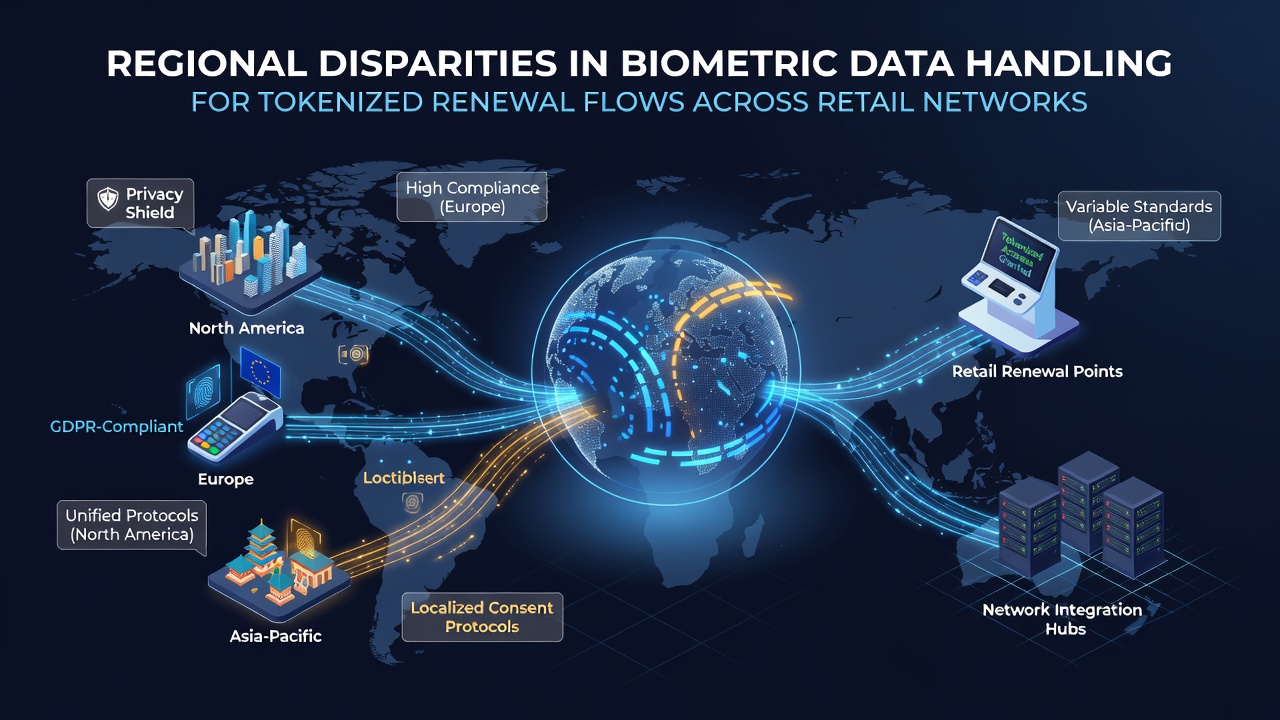
Regional Disparities in Biometric Data Handling for Tokenized Renewal Flows Across Retail Networks
Tokenized renewal flows allow retailers to process recurring transactions through secure digital tokens that replace sensitive payment details, and biometric authentication adds a layer of identity verification at each cycle. These systems appear across point-of-sale terminals, mobile apps, and loyalty platforms where customers authorize periodic charges without re-entering card numbers. Data handling practices for the biometric elements vary sharply by region because of differing privacy statutes, enforcement priorities, and infrastructure maturity levels.
Regulatory Frameworks Shape Data Storage Rules
European retailers operate under the General Data Protection Regulation, which classifies biometric information as a special category requiring explicit consent and strict purpose limitation. National data protection authorities in member states conduct periodic audits that focus on retention periods and cross-border transfers. In June 2026 several supervisory bodies published updated guidance clarifying how tokenized renewal systems must segregate biometric templates from transaction logs. Observers note that these clarifications prompted many chains to implement on-device processing rather than centralized storage.
North American approaches differ between federal guidance and state-level statutes. The United States lacks a single comprehensive biometric law, so requirements fragment along state lines while federal agencies issue sector-specific recommendations. Canadian provinces maintain their own privacy legislation that often aligns more closely with European standards, creating an internal contrast within the same continent. Retail networks spanning these jurisdictions maintain separate data pipelines to satisfy each set of rules.
Technical Implementations Reflect Local Infrastructure
Asia-Pacific markets demonstrate further variation. Singapore and South Korea emphasize rapid adoption of biometric tokens through national digital identity programs, resulting in standardized template formats shared across retail platforms. Australia applies its Privacy Act with sector-specific codes that govern how biometric data supports recurring payments in supermarkets and fuel stations. India’s Aadhaar-linked systems integrate biometric checks directly into tokenized flows for government-subsidized retail programs, producing large-scale datasets that require distinct security protocols.
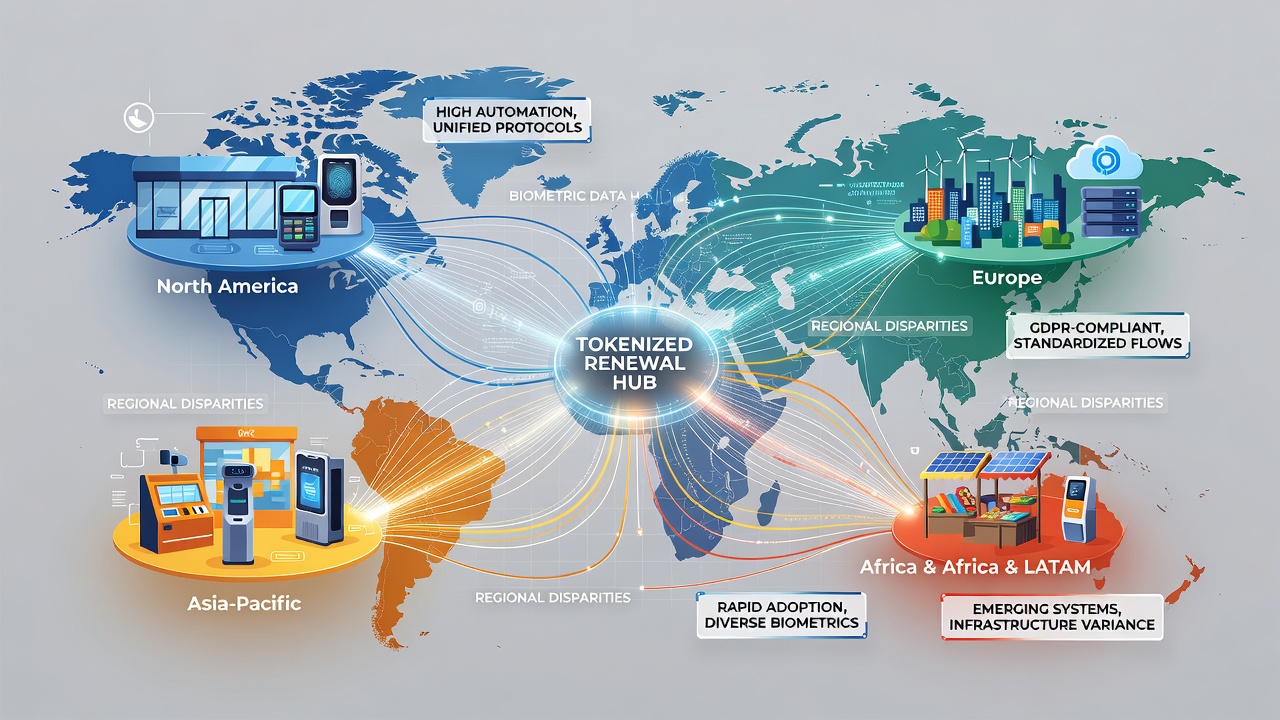
Encryption standards and key management practices also diverge. Some regions mandate hardware security modules located within national borders, while others permit cloud-based solutions under contractual safeguards. Retail technology providers adjust token generation algorithms accordingly, which affects processing speed and error rates during renewal attempts. Studies conducted by academic institutions in multiple countries reveal measurable differences in false rejection rates tied to these regional configurations.
Cross-Border Retail Operations Face Compliance Layers
Global retail chains must reconcile conflicting obligations when a single tokenized renewal transaction crosses jurisdictions. A customer enrolled in one country may trigger biometric verification while traveling elsewhere, prompting systems to apply the stricter of the two applicable rules. Industry reports from organizations such as the European Data Protection Board document how these conflicts increase operational costs and slow deployment timelines for new payment features.
Research from the National Institute of Standards and Technology outlines technical reference architectures that help standardize biometric template protection, yet adoption remains uneven because local regulators interpret those architectures through their own statutes. Consequently, identical hardware deployed in different markets may store or discard biometric data according to divergent schedules.
Conclusion
Regional disparities in biometric data handling continue to influence how tokenized renewal flows operate across retail networks. Regulatory divergence, infrastructure differences, and enforcement practices produce distinct technical and procedural requirements in each major market. Retail operators respond by maintaining flexible architectures that accommodate multiple compliance regimes simultaneously, a pattern expected to persist as biometric adoption expands.