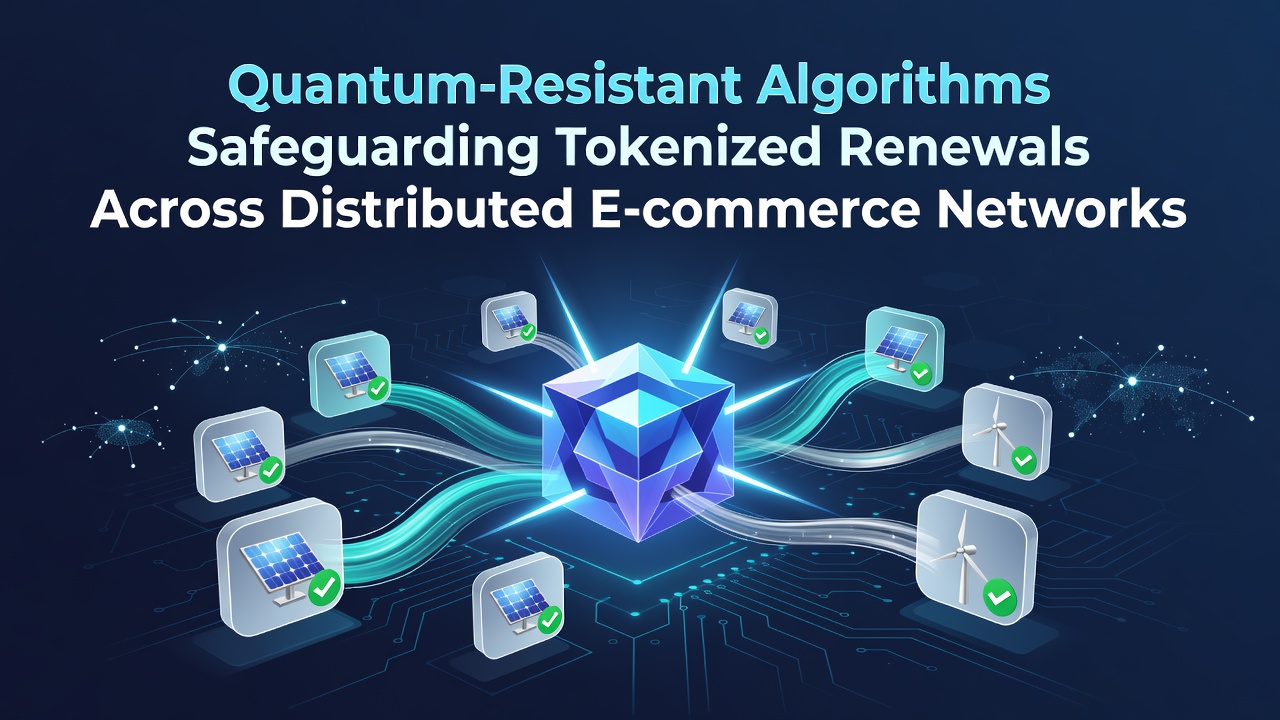
Quantum-Resistant Algorithms Safeguarding Tokenized Renewals Across Distributed E-commerce Networks
Quantum computing advances continue to challenge conventional encryption methods that underpin tokenized renewals in distributed e-commerce networks, where recurring payments rely on secure token exchanges across multiple nodes. Researchers track how algorithms such as RSA and ECC face potential breakage once large-scale quantum machines become operational, prompting a shift toward post-quantum cryptography standards that maintain data integrity during automated subscription cycles. Data from government agencies shows that lattice-based and hash-based schemes now receive priority testing because they resist both classical and quantum attacks while supporting the high-volume transaction patterns typical in online retail platforms.
Quantum Threats to Current Token Systems
Tokenized renewals operate by replacing sensitive payment details with unique digital tokens that authorize periodic deductions, yet these tokens often depend on cryptographic primitives vulnerable to Shor's algorithm when quantum hardware scales sufficiently. Studies indicate that a sufficiently powerful quantum computer could factor large integers or compute discrete logarithms in polynomial time, exposing renewal sequences that traverse distributed ledgers or cloud-based gateways. Observers note that e-commerce networks handling millions of micro-subscriptions each month must prepare for harvest-now-decrypt-later scenarios, where adversaries collect encrypted traffic today for future decryption. By August 2026 several pilot programs had begun migrating test environments to hybrid schemes that layer classical and quantum-resistant methods to maintain backward compatibility during transition periods.
Post-Quantum Cryptography Standards and Algorithms
Standardization bodies have selected algorithms such as CRYSTALS-Kyber for key encapsulation and CRYSTALS-Dilithium for digital signatures after extensive rounds of cryptanalysis. These lattice-based constructions rely on the hardness of problems like learning with errors, which remain intractable even for quantum adversaries. Hash-based signatures such as SPHINCS+ offer additional options for scenarios that require stateless verification across distributed nodes. Reports from the National Institute of Standards and Technology detail performance benchmarks showing that Kyber achieves key generation speeds comparable to existing elliptic-curve methods on commodity hardware, while Dilithium signatures fit within typical token payload sizes used in e-commerce APIs. Integration testing reveals that these algorithms can replace current primitives without altering the token lifecycle from issuance through validation and renewal.
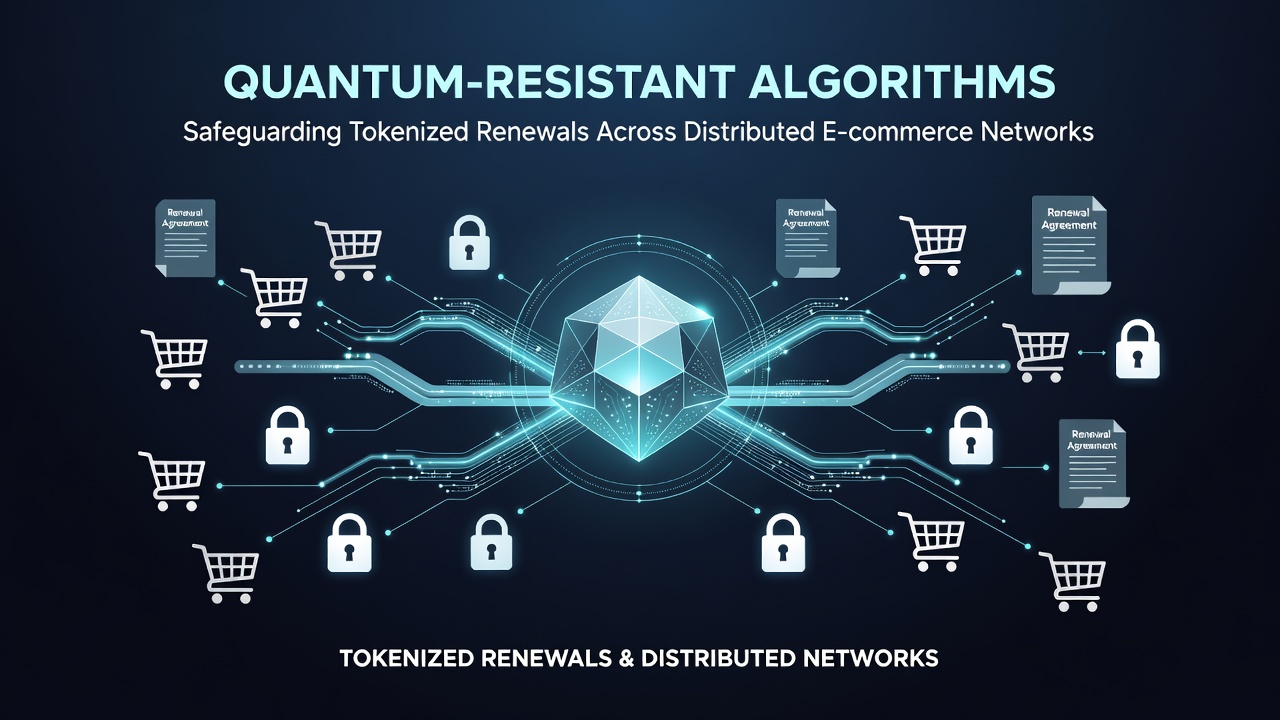
Implementation Across Distributed E-commerce Architectures
Distributed e-commerce networks route tokenized renewals through edge nodes, payment processors, and merchant servers, each requiring consistent application of quantum-resistant primitives to prevent single points of failure. One study revealed that embedding Kyber key exchange inside token generation workflows allows merchants to issue renewal tokens whose security parameters scale with anticipated quantum threat levels. Researchers discovered that signature verification latency remains under acceptable thresholds even when nodes operate on heterogeneous devices ranging from mobile gateways to high-throughput servers. European Telecommunications Standards Institute documentation outlines reference implementations that combine these algorithms with existing TLS stacks, enabling seamless upgrades in environments that process cross-border subscription traffic. Figures from industry trials show throughput reductions of less than 15 percent after migration, a margin that operators offset through hardware acceleration modules now entering commercial availability.
Operational Considerations and Migration Pathways
Network operators evaluate hybrid deployments that run both classical and post-quantum algorithms in parallel during initial rollout phases, allowing gradual replacement of vulnerable tokens without service interruption. Data indicates that key size increases associated with Kyber and Dilithium require modest bandwidth adjustments in renewal message exchanges, yet compression techniques developed by academic teams keep packet overhead manageable. Government agencies in Canada and Australia have published guidance documents that recommend inventorying all cryptographic dependencies before scheduling phased upgrades, emphasizing the importance of crypto-agility in long-lived subscription platforms. Those who have conducted audits report that centralized token vaults present fewer migration hurdles than fully decentralized ledger configurations, where consensus rules must also accommodate larger signature payloads.
Conclusion
Quantum-resistant algorithms now provide the cryptographic foundation required to protect tokenized renewals operating across distributed e-commerce networks, with standardization progress and implementation benchmarks establishing clear migration routes. Continued testing through 2026 and beyond will refine performance characteristics while preserving the security guarantees that recurring payment systems demand.