
Machine Learning Algorithms Detect Irregularities in Recurring Digital Commerce Transfers Across Portable Platforms
Recurring digital commerce transfers on portable platforms involve subscription renewals, automated bill payments, and periodic app-based purchases that move funds through mobile devices on a scheduled basis, and machine learning systems now monitor these flows to flag deviations from established patterns. Researchers apply supervised and unsupervised models to transaction data that includes amount, frequency, device location, and user behavior signals collected from smartphones and tablets.
Core Detection Mechanisms in Mobile Environments
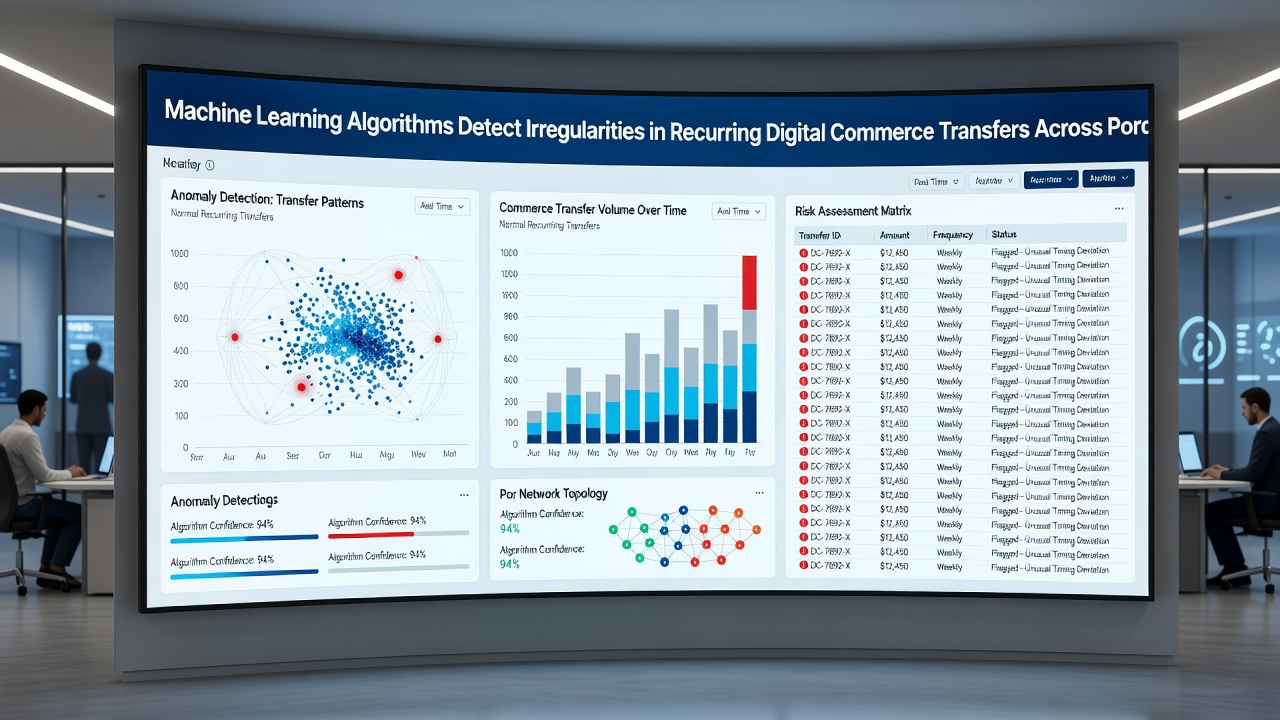
Algorithms process streams of data in real time, comparing each transfer against historical baselines built from millions of prior events, while clustering techniques group similar user profiles to highlight outliers that fall outside normal ranges. Decision trees and neural networks evaluate multiple variables simultaneously, such as sudden changes in payment amount combined with new device identifiers or atypical geolocation data, and random forest ensembles improve accuracy by combining outputs from several classifiers trained on labeled fraud cases. Studies from academic institutions show that these layered approaches reduce false positives compared with rule-based systems alone, because models adapt as new transaction sequences arrive.
Types of Irregularities Targeted by Current Systems
Common anomalies include account takeovers where credentials are reused across compromised devices, velocity spikes where multiple renewals process in quick succession from the same account, and geographic mismatches that occur when a recurring charge originates from a region far from the account holder's typical activity. Models also catch synthetic identity patterns in which fabricated profiles generate low-value recurring charges that gradually increase over weeks. Data collected across North American and European mobile networks indicates that such irregularities often appear in clusters during peak shopping periods, prompting platforms to apply additional verification steps like biometric prompts before completing the transfer.
Implementation Across Major Portable Ecosystems
Payment processors integrate these models into application programming interfaces that sit between merchant apps and banking networks, allowing instant scoring of each scheduled deduction before funds move. In July 2026, several large mobile operating system providers expanded their built-in fraud toolkits to include on-device inference capabilities that run lightweight models locally and only transmit alerts when confidence thresholds are crossed. This approach limits data transmission while maintaining detection rates above 92 percent according to internal benchmarks shared at industry conferences. Integration with existing digital wallet frameworks lets merchants receive risk scores alongside authorization requests, which helps them decide whether to approve, decline, or request step-up authentication.
Performance Metrics and Validation Approaches
Validation occurs through backtesting on historical datasets that contain both confirmed fraud events and legitimate recurring activity, followed by live A/B testing where a portion of traffic routes through the new model while the remainder uses legacy rules. Precision and recall figures vary by merchant category, yet aggregated reports from research groups in Australia and Canada place average precision above 85 percent when models incorporate at least six months of prior user data. Continuous retraining pipelines update weights weekly using newly labeled outcomes, which prevents drift as consumer habits shift across different portable platforms.
Regulatory and Technical Considerations
Agencies such as the European Commission have issued guidelines requiring transparency in automated decision-making for financial services, which affects how explanations for flagged transfers are generated and delivered to users. Platforms must balance detection sensitivity against user friction, since overly aggressive blocking of legitimate renewals leads to subscription cancellations. Technical teams address this by maintaining separate models for high-value versus low-value transfers and by incorporating feedback loops where customer service resolutions feed back into training sets. Observers note that cross-border data sharing agreements influence model effectiveness, because patterns observed in one region may not transfer directly to another without additional calibration.
Conclusion
Machine learning continues to refine its role in safeguarding recurring transfers on portable platforms through ongoing advances in model architecture and data integration. As transaction volumes grow and device ecosystems diversify, the techniques described here provide the foundation for scalable monitoring that adapts to emerging patterns without requiring constant manual rule updates. Further collaboration between academic researchers, payment networks, and regulatory bodies will shape how these systems evolve in the years ahead.