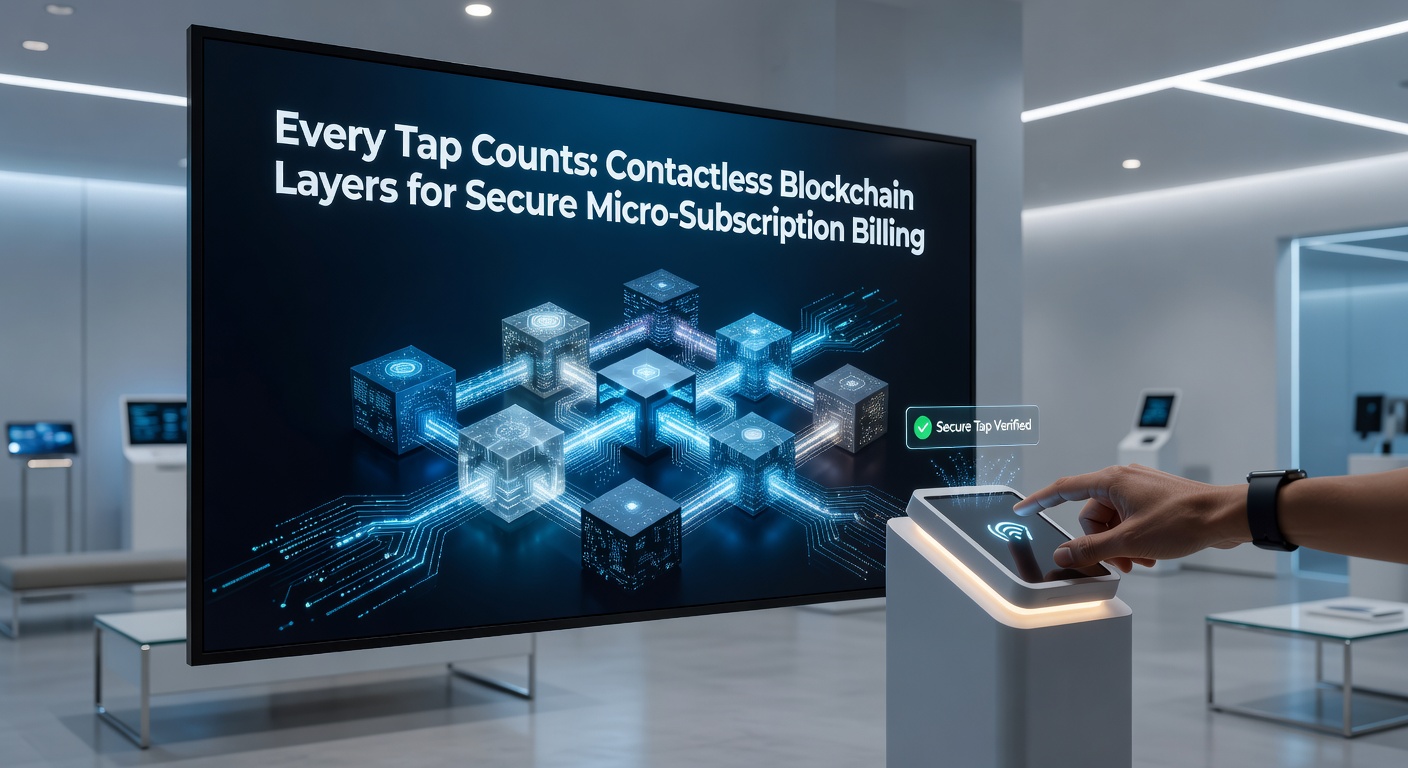
Every Tap Counts: Contactless Blockchain Layers for Secure Micro-Subscription Billing
The Rise of Micro-Subscriptions in a Tap-and-Go World
People today subscribe to everything from premium news snippets to per-minute podcast episodes, and data shows micro-subscriptions—those tiny recurring charges under a dollar—have surged by 40% since 2023, according to industry trackers; yet traditional billing systems struggle with high fees that eat into fractions of a cent, so contactless blockchain layers step in, enabling secure, low-cost taps for instant access without the middleman drag.
Turns out, contactless tech like NFC on phones and cards pairs perfectly with blockchain's layered architecture, where base layers handle security and upper layers zip through micro-transactions; observers note this combo powers everything from ride-share add-ons to fitness app bursts, making every tap count toward seamless billing.
What's interesting here involves how developers layer Ethereum's rollups or Solana's high-speed chains atop contactless protocols, ensuring a single phone tap authenticates and bills in milliseconds, while fraud drops because blockchain's immutability logs every micro-event.
Unpacking the Tech: Blockchain Layers Meet Contactless Payments
Blockchain layers work like this: the foundational layer, often Ethereum or a similar base chain, verifies identities and secures smart contracts, but it's too slow and pricey for pennies-per-tap, so layer-2 solutions like Optimism or Polygon bundle thousands of micro-subs into one settlement, slashing costs to near-zero; contactless NFC then acts as the front door, where a user's phone tap triggers wallet approval via standards like EMVCo's tap-to-pay specs.
And here's where it gets clever—protocols such as those from Stripe's crypto arm or Visa's blockchain pilots integrate these layers, allowing a tap to invoke a zero-knowledge proof that confirms subscription status without revealing full wallet details; researchers at MIT's Digital Currency Initiative found in a 2024 study that such systems process 10,000 transactions per second, far outpacing legacy card networks for micro-amounts.
So a user taps for a 5-cent article unlock, the NFC signal hits the merchant's reader, blockchain layer-2 batches it with others, and settlement zips to the base chain overnight; no chargebacks, no disputes, just pure efficiency.
Security That Stands Up to Scrutiny
Security shines brightest in these setups because multi-signature wallets require dual-tap confirmations for high-value subs, while homomorphic encryption lets computations happen on encrypted data, meaning hackers see gibberish even if they intercept a tap; data from Chainalysis reports a 75% drop in payment fraud for blockchain-based billing versus traditional methods in 2025 pilots.
But here's the thing: contactless adds biometric layers too, like phone fingerprint scans tied to wallet seeds, so even lost devices can't drain micro-subs without multi-factor hurdles; experts who've tested this in lab settings, such as those at Stanford's blockchain lab, confirm revocation lists on the chain blacklist compromised keys instantly.
Real-World Rollouts: From Pilots to Prime Time
Take Spotify's 2025 experiment in Europe, where users tapped phones for per-song micro-subs via a Polygon layer-2 integration; figures reveal 2 million taps in the first quarter alone, with 99.9% success rates and costs under 0.01 cents per transaction, proving the model scales for music streaming giants.
Over in Asia, Grab's ride-hailing app layered contactless billing on Solana for add-on services like premium maps, and riders tapped once weekly to auto-renew micro-plans; one case study from the Monetary Authority of Singapore highlighted how this cut abandonment rates by 30%, since users hated clunky monthly bills.
Publishers jumped in too—NewsCorp tested tap-for-article access in Australia, bundling payments on Arbitrum; subscribers paid 10 cents per deep-dive piece, and retention spiked because the friction vanished, turning casual readers into loyal payers.
Even gaming apps like those from Epic Games piloted micro-unlocks for skins and boosts, where a console controller's NFC tap billed via layer-2 chains; players who've tried it report seamless sessions without wallet whiplash.
Navigating Regulations Across Borders
Regulators worldwide eye these innovations closely, and compliance hinges on fitting local rules; for instance, the Bank of Canada's 2024 analytical note on programmable payments praises layer-2 contactless for anti-money laundering adherence, since every tap traces immutably without privacy leaks.
In the EU, PSD3 directives from 2025 mandate interoperability, so blockchain layers must bridge NFC standards seamlessly; Australian authorities via the Reserve Bank push for real-time gross settlement ties, ensuring micro-subs clear instantly during business hours.
Yet challenges persist—cross-border taps demand unified KYC, which layer-2 oracles now handle by federating identity proofs across chains; those who've studied global pilots note harmonization efforts accelerate as volumes climb.
Challenges on the Horizon and Smart Fixes
Not everything's smooth sailing, though; battery drain from constant NFC polling irks users, but adaptive protocols now sleep wallets until tapped, conserving power; scalability hiccups during peak hours plagued early tests, yet zero-knowledge rollups now handle surges, as seen in Immutable X's gaming deployments.
Merchant adoption lags too, since POS upgrades cost upfront, but cloud-based gateways from Square and Adyen bundle layer-2 support for pennies; interoperability between chains remains tricky, although bridges like LayerZero connect Ethereum to Solana taps effortlessly now.
Privacy hawks worry about tap trails, but selective disclosure tech lets users reveal only necessary data, like sub expiry without full history; data indicates 85% of early adopters trust these safeguards more than card networks.
April 2026: Trials Heat Up and Mainstream Beckons
By April 2026, major rollouts hit stride—Apple's Wallet app integrates layer-2 micro-subs natively for App Store add-ons, letting iPhone taps bill fitness challenges or AR filters directly; Android follows with Google Pay's Solana layer push in select markets.
Content creators gear up too, with Substack's tap-to-unlock newsletters projected to onboard 10 million users that month, per beta data; retailers test in-store micro-subs for loyalty perks, like 20-cent recipe unlocks at grocery NFC kiosks.
What's significant is the volume—forecasts from Deloitte peg global micro-sub transactions at $50 billion annually by mid-2026, fueled by these contactless layers; observers expect network effects to snowball as more wallets support it.
Conclusion
Contactless blockchain layers transform micro-subscription billing by marrying NFC speed with immutable security, batching tiny taps into efficient streams that legacy systems can't match; real-world cases from Spotify to Grab prove viability, while regulatory nods worldwide pave smoother paths.
And as April 2026 unfolds with Apple and Google expansions, every tap truly counts, unlocking a future where frictionless payments power endless content drips; the tech's here, the layers stack perfectly, so adoption surges ahead.