
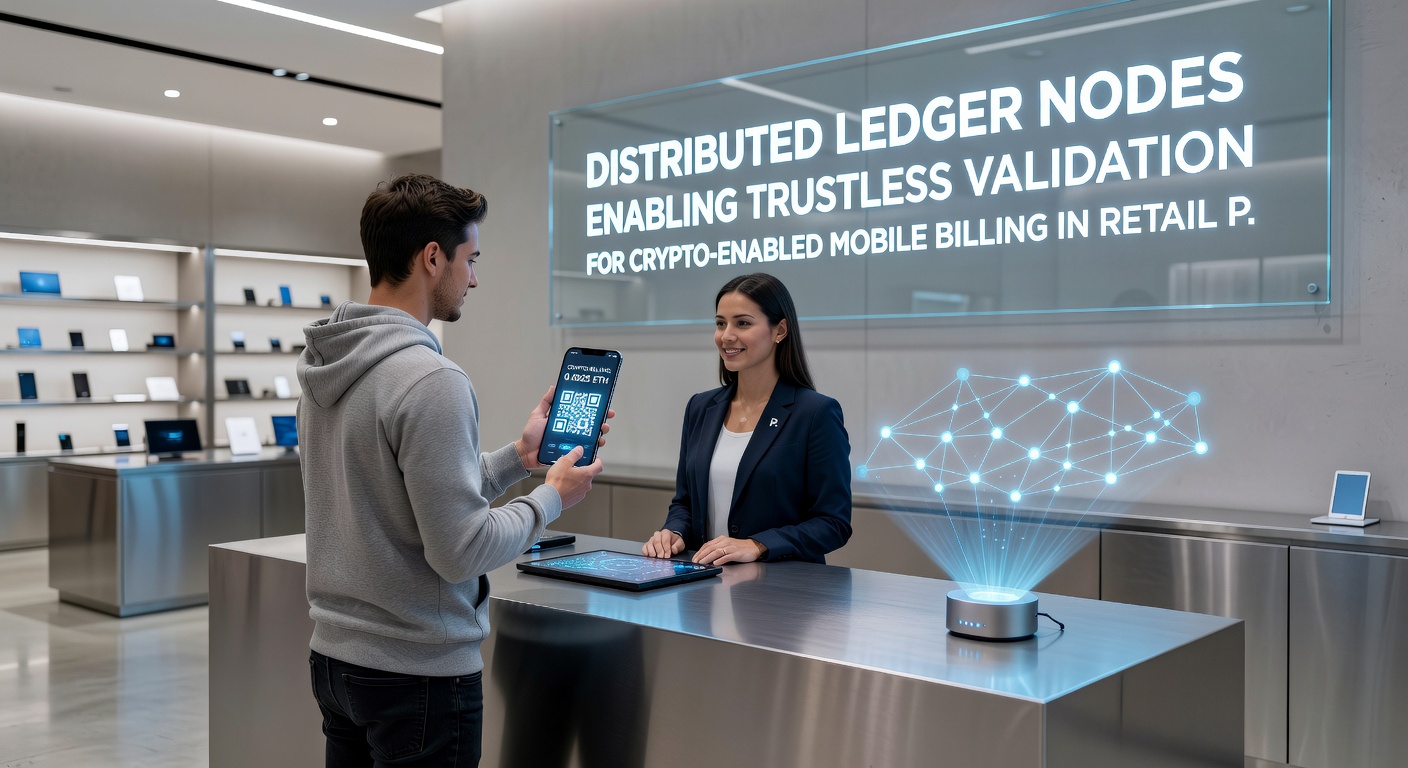
Distributed Ledger Nodes Enabling Trustless Validation for Crypto-Enabled Mobile Billing in Retail Platforms
Distributed ledger nodes operate as independent validators across decentralized networks, confirming transactions without requiring a central authority to establish trust between parties. In retail environments these nodes handle crypto-enabled mobile billing by verifying payment requests in real time, which allows shoppers to complete purchases through smartphone applications that interface directly with blockchain protocols. Retail platforms integrate this technology to process recurring charges or one-time payments in digital currencies, and the system records each step on an immutable ledger that multiple participants maintain simultaneously.
How Node Networks Validate Transactions
Each node maintains a copy of the ledger and participates in consensus mechanisms such as proof-of-stake or practical Byzantine fault tolerance, which confirm the validity of billing instructions before they execute. When a consumer initiates a mobile payment at checkout, the request routes to several nodes that cross-check the wallet balance, transaction amount, and cryptographic signatures; once agreement occurs the charge processes and the updated balance appears on the shared record within seconds. This process eliminates intermediaries like traditional payment processors in many cases, while data from the Bank for International Settlements shows growing adoption of similar node-based systems in cross-border retail pilots through early 2026.
Retail chains in Europe began testing these setups more widely after regulatory updates from the European Securities and Markets Authority clarified crypto asset treatment in consumer billing. Nodes running on edge servers near store locations reduce latency, so a customer scanning a QR code or tapping a phone completes the crypto transfer before leaving the counter. Observers note that this architecture supports high transaction volumes because additional nodes can join the network without central approval, distributing the validation load evenly.
Mobile Integration and Retail Billing Workflows
Developers embed wallet software into retail mobile applications, allowing the phone to communicate with nearby nodes through API calls that request validation for each billing event. The application displays the crypto amount due, converts it from fiat if needed using oracle feeds, and submits the signed transaction to the ledger; nodes then confirm the details before the retailer receives notification of successful settlement. In May 2026 several major supermarket groups in Australia reported expanded use of these mobile billing flows, citing reduced chargeback rates compared with card networks because the distributed validation prevents duplicate spending attempts at the protocol level.
Security features rely on the nodes themselves rather than single points of failure; each validator runs identical software that rejects malformed requests or insufficient funds automatically. Retail staff therefore focus on customer service instead of payment disputes, while shoppers gain immediate proof of transaction finality through their device. Research from the University of Melbourne's Blockchain Innovation Hub indicates that node density in urban retail corridors correlates with faster confirmation times, often under four seconds for standard invoice amounts.
Scalability Considerations Across Retail Networks
Larger retail platforms deploy permissioned node clusters alongside public ledgers to balance speed and transparency. Permissioned nodes operated by the retailer or approved partners handle routine mobile billing validations, while periodic checkpoints anchor the data to a public chain for auditability. This hybrid model accommodates seasonal sales peaks without overwhelming the broader network, and data shows transaction throughput can reach several thousand per minute when node counts exceed one hundred in a regional cluster. Canadian regulators at the Ontario Securities Commission have published guidance encouraging such layered approaches for consumer-facing crypto services, emphasizing consumer protection through transparent validation logs.
Energy consumption remains a factor because proof-of-work nodes demand more resources, yet many retail implementations favor proof-of-stake variants that reduce power draw by over ninety percent according to industry benchmarks. Nodes also support smart contract execution, which automates conditional billing such as loyalty discounts applied only after certain purchase thresholds are met. These contracts run identically on every participating node, ensuring consistent outcomes regardless of which validator processes the request first.
Conclusion
Distributed ledger nodes continue to underpin trustless validation for crypto-enabled mobile billing by providing verifiable consensus across retail transaction flows. As platforms expand these capabilities in 2026, the combination of mobile interfaces and decentralized record-keeping supports faster settlements and reduced reliance on centralized processors. Retailers that adopt the technology gain access to audit-ready data streams while consumers experience streamlined checkout processes backed by cryptographic certainty rather than institutional guarantees.